
Iron and Levothyroxine: Two Morning Habits That Cancel Each Other
Ferrous sulfate binds levothyroxine in the gut and reduces its effect in people treated for hypothyroidism. The standard separation is four hours.
Written by the Biostacks Team
Not medical advice. This content is for educational purposes only and is not a substitute for professional medical guidance. Always consult a qualified healthcare provider before starting, stopping, or combining any supplement or medication.
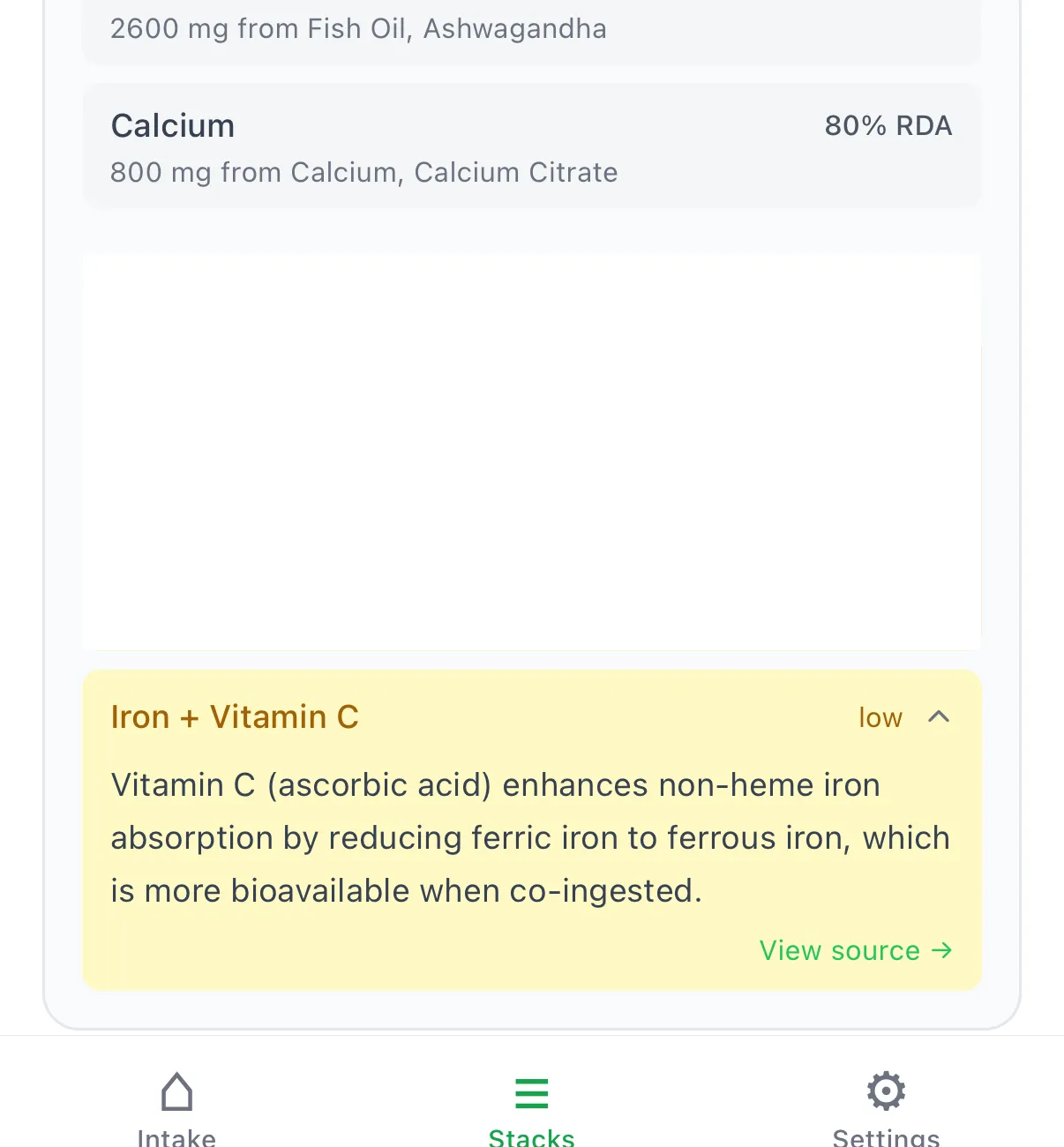
Flagged in Biostacks
Biostacks flags this automatically.
Add Iron and Levothyroxine to your stack and Biostacks checks for this interaction in real time.
Iron supplements and levothyroxine are both meant to be taken on an empty stomach, first thing in the morning. That shared instruction is exactly what causes the problem.
The chemistry
Ferrous iron is a divalent cation, and levothyroxine binds to divalent cations readily. In the gut the two form a ferric-thyroxine complex that the intestinal wall does not absorb. What binds is lost, not delayed.
Studies in people treated for hypothyroidism have shown the practical result. Adding ferrous sulfate to an established levothyroxine regimen pushed TSH upward in patients who had been stable, which is the signature of a dose that is no longer fully landing. Removing the overlap brought the numbers back.
Why the overlap is so common
The two groups involved here have a large intersection. Hypothyroidism is far more common in women, and so is iron deficiency. Coeliac disease, autoimmune gastritis, and heavy menstrual bleeding all push people toward both prescriptions at once.
There is also a diagnostic tangle worth knowing about. Fatigue is the shared headline symptom of iron deficiency and undertreated hypothyroidism, so someone who feels tired despite a stable levothyroxine dose may be told to try iron. If that iron then blunts the levothyroxine, the fatigue does not lift and the reason is invisible from either side.
Four hours apart
Levothyroxine interactions are usually handled with a four-hour gap rather than the two hours that clears most mineral competition. The wider window accounts for how narrow levothyroxine’s therapeutic range is and how long iron stays in the upper gut.
The practical arrangement most people land on is levothyroxine on waking and iron in the late afternoon or before bed. Iron absorbs best away from food, so an evening slot several hours after dinner works without giving up the empty-stomach advantage that iron also wants.
Splitting an iron dose across the day complicates this, since the earliest portion is the one most likely to land inside the window.
Multivitamins count
A multivitamin with 18mg of iron is still iron. So is a prenatal, and so is a fortified breakfast cereal eaten with the morning tablet. People who have carefully separated their standalone iron supplement sometimes still take a multi with breakfast, which puts the interaction straight back into the morning.
If thyroid bloodwork drifts after a new supplement enters the routine, the ingredient list of everything taken before noon is the first thing to check.
Reference
- Office of Dietary Supplements, National Institutes of Health. "Iron: Fact Sheet for Health Professionals." ods.od.nih.gov